
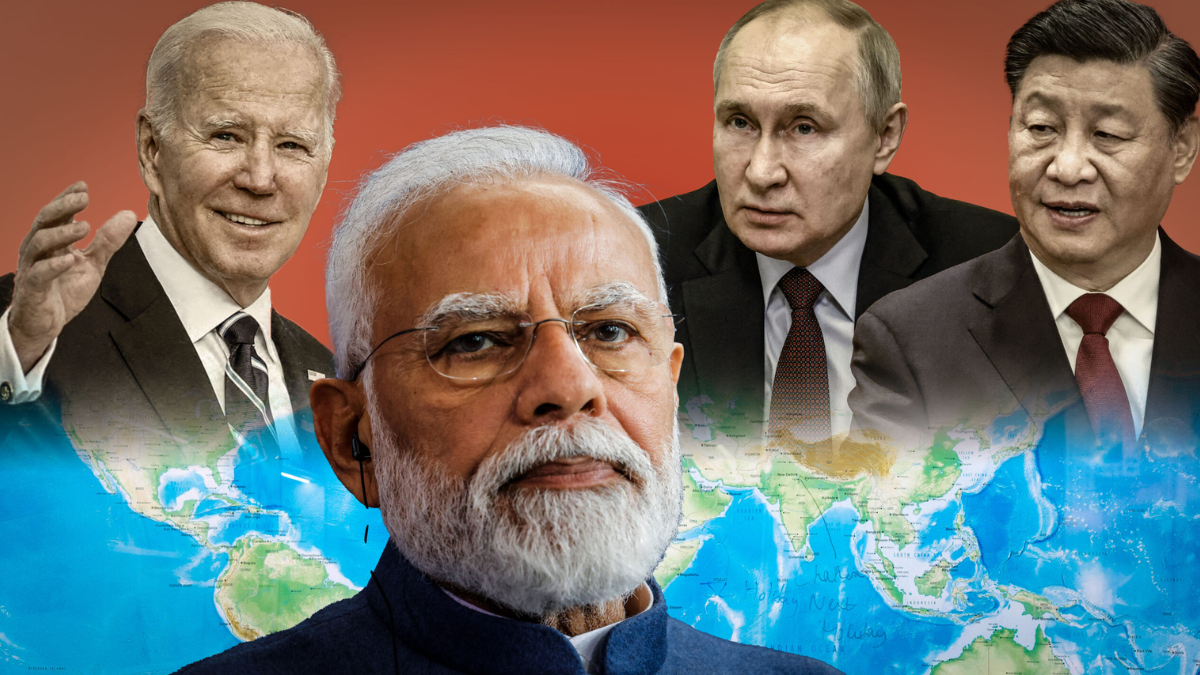
Summary – As Russia’s President Vladimir Putin advocates for equal rights among major economies, the global shift towards a multipolar world order takes center stage.,
Article –
Russian President Vladimir Putin recently emphasized the need to recognize India, China, and Russia as major economies that should coexist without dominance by any single nation. This statement highlights the growing momentum toward a multipolar world order, where multiple countries share global influence rather than a unipolar or bipolar dominance.
Background
The multipolar world concept challenges the post-Cold War unipolar system dominated by the United States. Rising economic powers like China and India, along with Russia’s continuing influence, have gradually shifted global power balances. Putin’s remarks underscore these nations’ efforts to create a more balanced international system, emphasizing:
- Collaboration on global issues such as trade, security, and climate change
- Resistance to hegemonic tendencies by any single country
The Global Impact
Calls for equal rights among major powers reflect changing international relations and pressure on global governance institutions like the United Nations and the G20 to adapt. The impact includes:
- Changes to global economic policies and trade agreements
- Reconfiguring security alliances
- Potential for more diverse leadership in areas such as climate diplomacy and conflict resolution
However, this shift also brings complex challenges related to coordination and competition among leading powers.
Reactions from the World Stage
The international response has been mixed:
- Western countries acknowledge the rise of India, China, and Russia but stress collaborative frameworks based on democratic values and international law.
- Emerging economies view multipolarity as an opportunity to address inequalities within global financial and diplomatic institutions.
Experts interpret Russia’s stance as part of its strategy to counterbalance Western influence, while India and China aim to shape a future global order that mirrors their growing economic and geopolitical strength.
What Comes Next?
The path toward a multipolar world offers both opportunities and challenges:
- Opportunities: More voices and perspectives in global policymaking leading to inclusive and comprehensive solutions addressing economic recovery and environmental sustainability.
- Challenges: Managing tensions from competing national interests requires strong diplomatic efforts and conflict resolution.
Future developments will depend on how major powers navigate relationships within bilateral and multilateral forums, with potential redefinition of international cooperation mechanisms.
The balance between competition and cooperation among powerful nations will critically shape the geopolitical landscape in the coming years.
About The Author


