
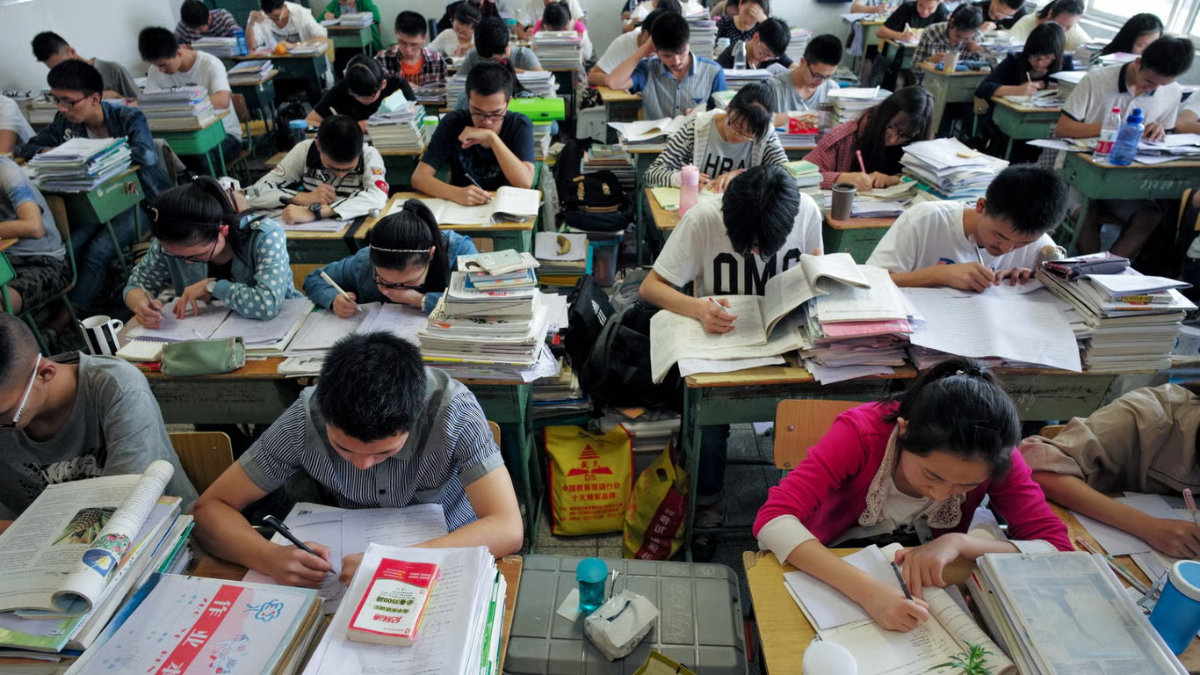
Summary – China’s gaokao, the high-stakes college entrance exam, extends its influence far beyond academics, shaping societal dynamics and economic prospects.,
Article –
China’s gaokao, officially known as the National Higher Education Entrance Examination, stands as one of the most significant annual events influencing millions of lives and the broader socio-economic fabric of the country. Held every year in early June, this rigorous exam not only determines university admissions but also profoundly impacts China’s workforce, family structures, and regional policies, reflecting broader implications for global economic and geopolitical trends.
Background
The gaokao was first implemented in 1952 and has undergone extensive reforms to align with China’s dynamic economic ambitions and societal needs. Spanning two to three days, it tests a range of subjects including Chinese language, mathematics, foreign languages, and chosen sciences or humanities. The exam’s score serves as the primary criterion for college admissions, deeply influencing students’ academic opportunities and career trajectories.
The gaokao plays a foundational role in shaping social mobility and regional educational disparities in China. High scores open doors to prestigious universities within China and increasingly abroad, while lower scores can limit access to higher education entirely. This system has entrenched a culture of intense academic competition and parental investment.
The Global Impact
While the gaokao is a domestic examination, its influence extends beyond China’s borders. As China continues its rise as a global economic powerhouse, the exam acts as a critical filter shaping the quality of its future workforce, innovators, and leaders, which in turn affects global markets and technological advancements.
Moreover, the pressure and intense preparation surrounding the exam has triggered international debate on educational practices and mental health worldwide, spurring other nations to reassess their own entrance systems and student welfare policies. Additionally, the gaokao indirectly impacts global migration trends, as top performers often seek opportunities abroad, further intertwining China’s education system with global talent flows.
Reactions from the World Stage
Internationally, the gaokao is often viewed both with respect for its rigorous standards and concern for the immense societal pressure it places on students. Education experts and policymakers see the exam as a reflection of China’s meritocratic ambitions coupled with challenges in balancing equity and access.
Multilateral organizations focused on education have highlighted how such high-stakes testing can contribute to stress-related health issues. At the same time, economic analysts emphasize how the gaokao shapes the caliber of China’s emerging professionals, which can influence global sectors including technology, manufacturing, and research.
What Comes Next?
China has been experimenting with reforms to modernize and diversify assessment methods, including incorporating holistic evaluations alongside standardized testing. These efforts seek to reduce stress, address regional disparities, and align education outcomes with China’s evolving economic priorities.
Globally, the gaokao will remain a benchmark for understanding how education systems adapt under the pressures of modernization and globalization. Its outcomes have consequences not only for China’s internal development but also for international labor markets and geopolitical dynamics.
As China continues to reform the gaokao, questions arise about how education can balance rigor with well-being and inclusiveness, a challenge facing societies worldwide. The trajectory of this exam could well signal transformations in global education standards and talent cultivation strategies.
Stay tuned to Questiqa World for more global perspectives and insights.
About The Author


