
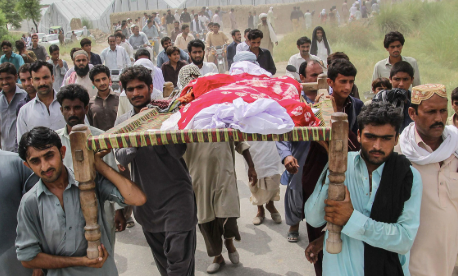
Summary – A disturbing incident from Pakistan’s Balochistan province highlights ongoing challenges related to honour killings and their broader social implications.,
Article –
A recent tragic incident in Pakistan’s Balochistan province has brought to light the ongoing issue of honour killings, violent acts often targeting women perceived to have dishonored their families. A disturbing video circulating on social media shows the brutal murder of a young couple who married against their families’ wishes, highlighting serious human rights challenges.
Background
Balochistan, Pakistan’s largest and least developed province, struggles with socio-political instability. Honour killings, as defined by the United Nations, are murders committed to protect or reclaim family or community honour. The couple in question was targeted for defying traditional norms by marrying without family consent, an act legally permissible but socially condemned due to entrenched tribal and patriarchal customs. The violence escalated quickly, culminating in the tragic murder captured on video, sparking national outrage and calls for stricter law enforcement.
Key Actors
Several key players are involved in such cases:
- Local tribal leaders: These figures hold significant influence over social and personal matters within their communities.
- Pakistani government and law enforcement: Operate amid the complexity of customary laws alongside formal judicial systems.
- Human rights organizations: Campaign for stronger legal protection and victim support, although implementation varies regionally.
Balochistan’s instability also has regional implications due to its proximity to Afghanistan and Iran and its importance to infrastructure projects like the China-Pakistan Economic Corridor (CPEC).
The Global Impact
Honour killings are a global human rights concern affecting many countries. International bodies, including the United Nations, have condemned these acts for violating fundamental rights, especially concerning gender-based violence. This case has revived debate on cultural relativism versus universal human rights and emphasizes the need for international cooperation, education, and awareness to combat patriarchal norms perpetuating such violence.
Reactions from the World Stage
The viral video has triggered strong reactions:
- International human rights advocates: Condemned the killings and demanded justice and accountability.
- Pakistani government: Faces pressure to enhance enforcement against honour killings and protect vulnerable groups.
- Civil society and political leaders: Have called for legislative reviews and balancing tribal customs with constitutional rights.
- Social media platforms: Played a significant role in awareness but raised ethical concerns about sharing violent content.
What Comes Next?
The tragic event demands sustained attention and multi-faceted action. Experts recommend:
- Legal reform: Strengthened laws and enforcement mechanisms against honour killings.
- Community engagement and education: Challenging patriarchal values and promoting awareness.
- Empowerment of marginalized groups: Especially women and youth to address gender inequality.
- International collaboration: Providing funding, capacity-building, and advocacy to support local efforts.
The effectiveness of reconciling traditional practices with universal human rights standards will significantly impact the fight against gender-based violence and social injustice in the region.
About The Author


